Soft washing is a material and soil decision
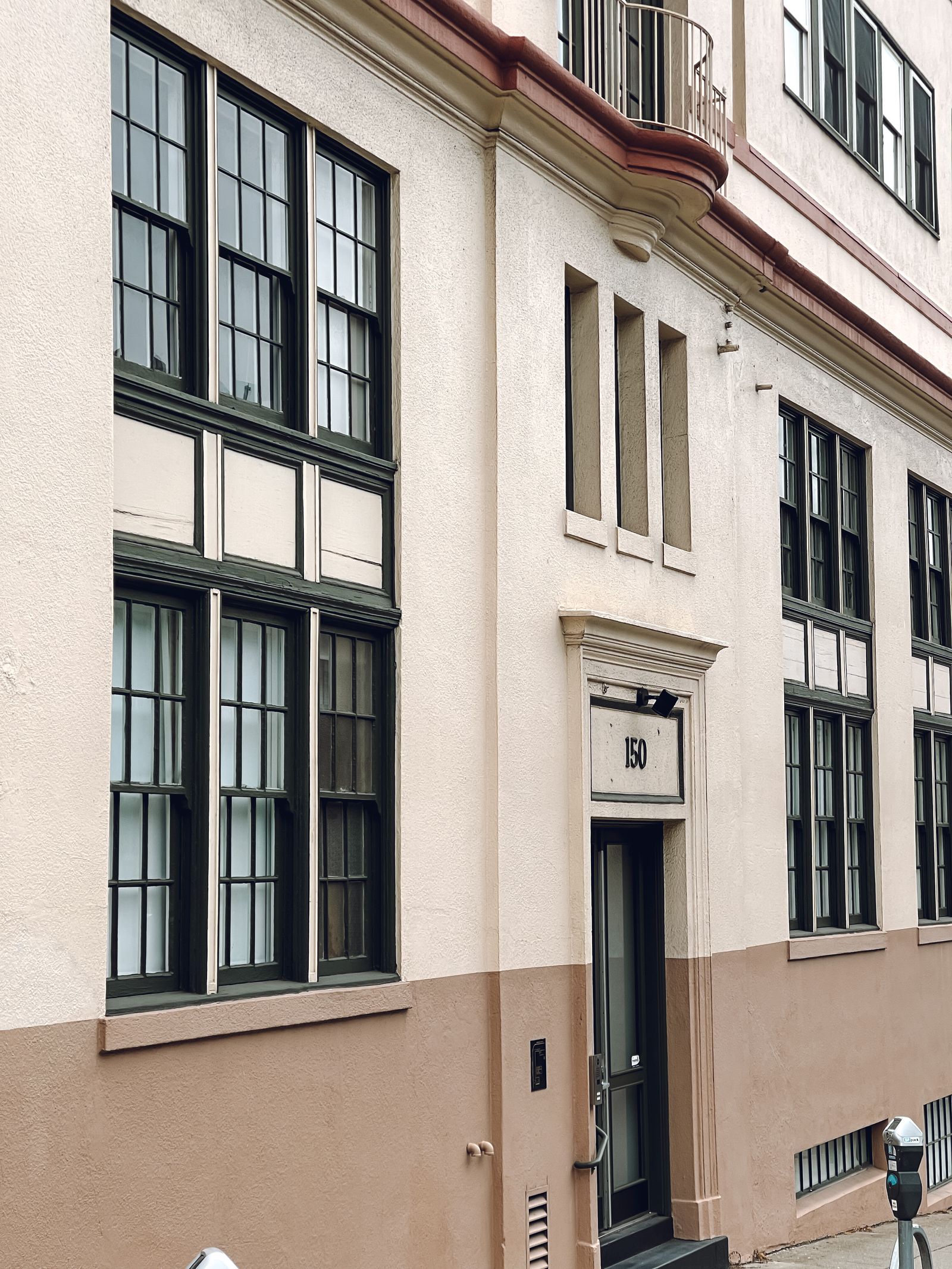
Soft washing relies more on a compatible treatment, dwell time, and controlled rinsing than on impact force. It may fit selected brick, painted masonry, stucco, EIFS, tilt-up concrete, metal, and other tested surfaces affected by organic staining, pollen, bird residue, or atmospheric film. Lower pressure can reduce some mechanical stress, but chemistry, dwell, temperature, wind, overspray, and failed joints still matter. An Evansville facade with older repairs or mixed coatings should have a representative test area and dry review before a large scope is approved.
The goal should be named first: routine maintenance, a cleaner entry, removal of organic growth, tenant turnover, a sale, or investigation of a specific streak. Soft washing does not repair cracked mortar, spalled concrete, open sealant, leaking roof edges, corrosion, mineral scale, oxidation, or failing paint. A responsible bid says what should improve, what may remain, and which condition belongs to a mason, painter, roofer, restoration specialist, or building-envelope professional.
Pressure washing can fit selected durable Evansville zones
Controlled pressure may be appropriate for sound concrete sidewalks, loading pads, service yards, parking surfaces, garage decks, and other hardscape when the condition, nozzle, distance, force, flow, and surrounding use have been evaluated. It is not a universal commercial-building method. Excess force can etch concrete, disturb mortar, strip paint, damage stucco or EIFS, open joints, push water behind coatings, or dislodge trim. A more powerful machine does not automatically create a better result.
Lower walls beside the Lloyd Expressway or a retail drive aisle may collect traffic film, tire splash, salt, and winter residue, while upper walls may show organic growth, pollen, river moisture, or roofline streaking. Pressure-cleaned hardscape and a soft-washed facade can be part of one project if the boundaries are clear. Ask why pressure is proposed for each zone, how adjacent doors and finishes will be protected, how water will be managed, and what will be checked after drying.
Evansville operations can decide whether a method works
Downtown buildings may manage pedestrians, restaurants, office arrivals, deliveries, curb parking, and event schedules. Eastland-area retail properties may have customers, carts, signs, drive aisles, and multiple tenants. Medical corridors need patient drop-off, emergency access, accessible routes, air-intake awareness, and quiet coordination. Riverfront and industrial sites may have trucks, docks, security, production schedules, utilities, and equipment that cannot be exposed to uncontrolled water or overspray. A technically suitable method still fails if it blocks the wrong route or creates a wet surface at the wrong time.
Compare work windows, barriers, spotters, hose routes, pause authority, tenant notices, delivery coordination, and handback standards alongside the cleaning method. A phased plan may keep a medical entrance, retail door, loading dock, or employee route in service. Include snow-storage areas, salt piles, garage ramps, and low pavement in the site review because winter materials can affect both the soil and the safe movement of water.
Humidity, river moisture, and winter residue change the diagnosis
Humid air, shade, rain, and river-adjacent moisture can contribute to recurring organic staining on north-facing walls, recessed entries, landscaping edges, and beneath rooflines. Storms can move soil across a lower wall or overwhelm a planned flow path. Winter snow, slush, and deicing salt may leave white deposits, streaks, and traffic splash that need a different response from biological growth. Freeze-thaw cycles can expose cracked joints, spalling, loose masonry, and failed coatings that should be documented before mechanical or chemical cleaning.
The weather window should consider rain, lightning, wind, humidity, surface temperature, drying time, freezing risk, and the condition of public routes. Direct sun can shorten dwell on one elevation while a shaded river-facing wall remains wet. Wind can carry mist and affect aerial stability. If staining repeatedly follows a gutter, scupper, downspout, roof edge, HVAC discharge, or irrigation line, the proposal should flag the source instead of implying that either washing method will permanently solve it.
Compare aerial support with the finish the building needs
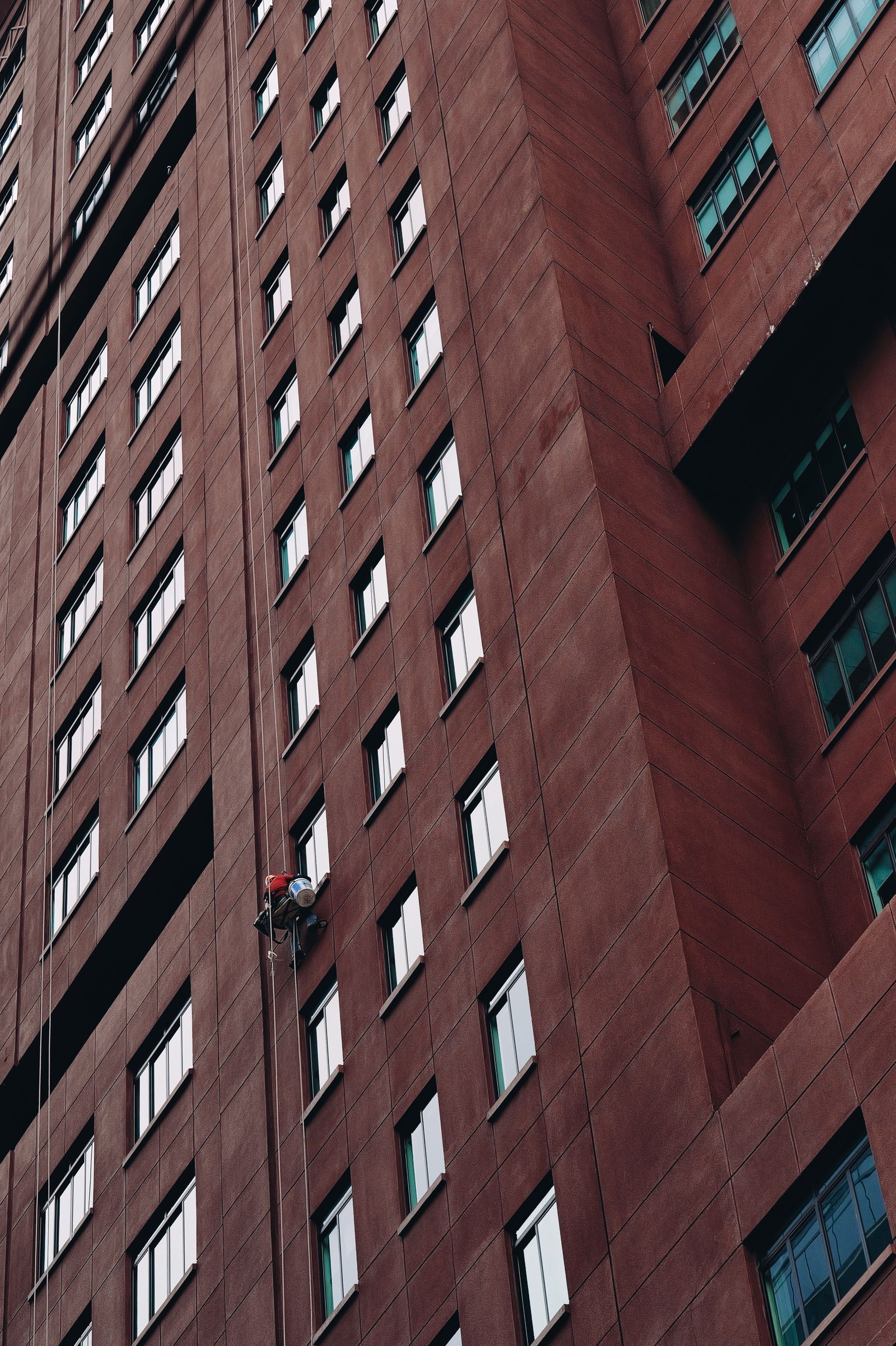
Aerial assistance may help on a broad, compatible upper wall when Evansville wind, airspace, line of sight, stand-off distance, launch space, water supply, public separation, and ground controls are workable. Its value is often reduced repositioning, not unlimited access. An aircraft cannot squeegee glass, brush a recessed ledge, scrape bonded mineral deposits, inspect a joint at contact distance, or repair a coating. Entrances, signs, balconies, roof details, and sensitive trim may still require a pole, lift, roof, or hand approach.
The actual property should be reviewed for utilities, trees, cranes, rooftop equipment, roads, industrial structures, and proximity to Evansville Regional Airport. Commercial drone work remains subject to applicable FAA requirements. A proposal should mark aerial zones, weather hold points, public separation, spotter positions, and the grounded alternative if conditions change. If the controls are not adequate, the safer and more predictable choice is a non-aerial method.
Compare water, runoff, and closeout assumptions
Both soft washing and pressure washing move water and removed soil. Compare the product, expected flow, slope, drains, low points, landscaping, door thresholds, vehicles, neighboring property, and public routes for each proposal. Downtown pavement, retail lots, medical drives, industrial yards, and garage ramps can send water toward a curb inlet or low area faster than expected. A grate is not automatic permission for treated water to enter a storm system. Depending on the site, controls can include diversion, collection, recovery, reduced flow, filtration, protection, disposal, or coordination with the responsible authority.
Require a bid to state its assumptions and its response if water follows a different path. Ask how plants, air intakes, electrical equipment, patient routes, guest paths, vehicles, and production areas will be protected. Request dry-condition photographs and a note of deposits, source conditions, or damage that remains outside the wash scope. This makes competing proposals easier to evaluate and gives the facilities team a useful record after the work.
- Require a material-specific method and expected finish by elevation or surface zone.
- Separate routine washing from restoration, glass detail, mineral treatment, coating work, and repairs.
- Review weather, winter residue, people, vehicles, access, airspace, water, and runoff controls.
- Request dry-condition photos and a record of remaining deposits or source conditions.
Use the Evansville quote to choose a defensible method
For a compatible Evansville facade, a tested soft-wash approach may be a sensible first step for organic staining, pollen, bird residue, or atmospheric film. A sound service yard or concrete approach may instead tolerate controlled pressure. Other areas may need a low-flow rinse, pole detail, lift access, mineral treatment, or restoration. Because commercial properties combine materials and uses, the most credible plan may combine methods rather than apply one process everywhere.
Ask the contractor to identify materials, visible conditions, proposed method by zone, access equipment, water assumptions, weather limits, occupied-site controls, expected finish, exclusions, and closeout documentation. If aerial support is proposed, ask where it is feasible and what backup access applies. Drone Building Cleaners can review Evansville offices, healthcare properties, retail centers, hotels, warehouses, campuses, garages, riverfront facilities, and industrial exteriors and explain where soft washing, controlled pressure, contact work, aerial assistance, or specialty treatment fits.
For a quote, call +1 239-351-2897, email contact@dronebuildingcleaners.com, or use the existing contact form. Include the Evansville address, photos, approximate height, priority elevations, visible conditions, operating schedule, water access, nearby drains, and any patient, tenant, delivery, production, snow, salt, or access restrictions. The resulting scope should make the method and its limits understandable before approval.